When Respectability Turns Inward: Untangling the Conditions of “Love Yourself”
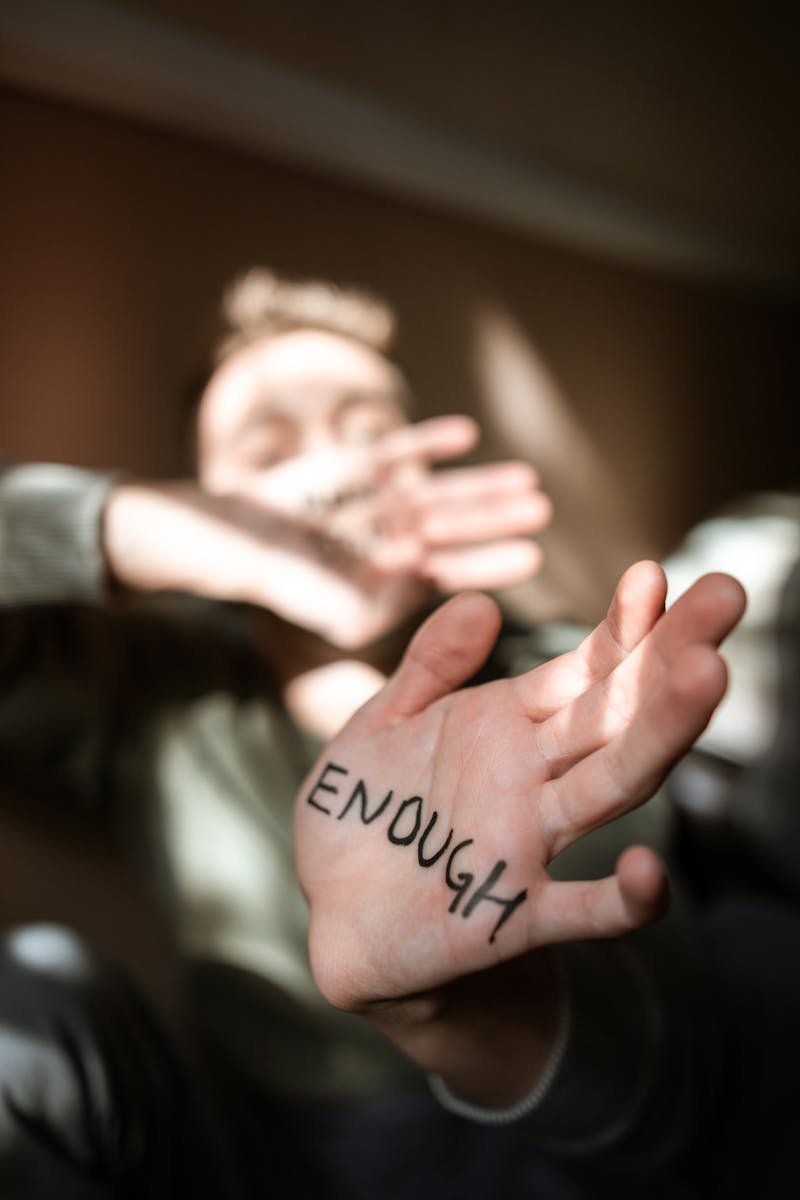
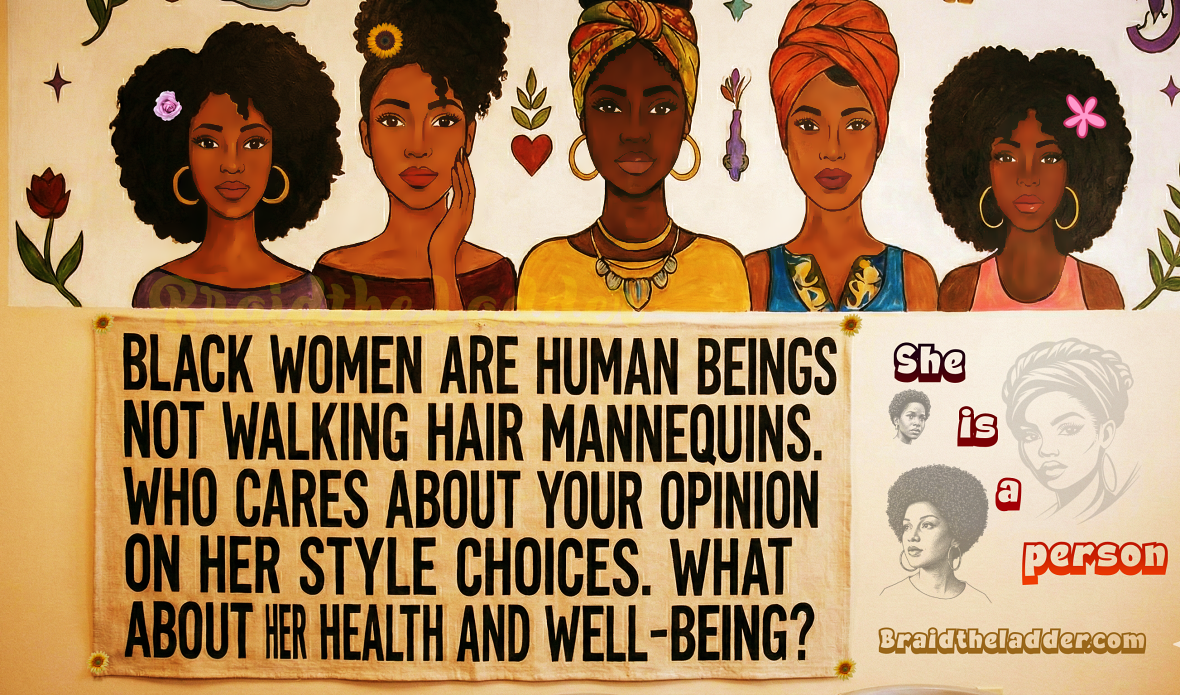
There is a particular kind of pressure that Black women know too well — not just from the world outside, but from voices within our own circles. It is the scrutiny of our hair. The commentary. The uninvited opinions. The micro-investigations disguised as care.
We talk a lot about “loving ourselves,” but far too often that message arrives wrapped in critique:
- “You’d look better if you blended that leave-out properly.”
- “Is that synthetic? I can tell.”
- “Why would you wear that texture?”
- “How long have you had those braids in? It’s time.”
- “Are you gonna wear your real hair for once?”
- “That wig is doing too much.”
- “Your curls don’t look natural.”
Suddenly, the encouragement to “be confident” sounds suspiciously like a demand to conform.
This isn’t self-love.
It’s surveillance.
Hair Policing in the Name of ‘Support’
Many Black women are told to embrace their natural selves — yet the second they do, there’s a lineup of inspectors ready to evaluate the outcome:
- texture questioned
- parts examined
- lace scrutinized
- edges monitored
- length inspected
- style choice debated
Loving yourself shouldn’t require passing an inspection.
But somehow our hair becomes a report card.
We are told to be proud, but only if our hair fits someone else’s image of what pride should look like.
That isn’t affirmation.
That is control.
The Disguised Message Beneath the Compliment
A statement like:
“Girl, love yourself!”
should be freeing.
But when it’s followed by:
- “…not with that wig.”
- “…those braids look tired.”
- “…you’d be prettier if…”
The real message becomes:
“There is a correct way to be you, and I get to decide what it is.”
That is not self-love.
It’s emotional coercion.
And it teaches Black women that our worth is always conditional:
- Love yourself — but only if your hair pleases us
- Be confident — but not like that
- Be natural — but not that natural
- Be free — but check in first
Freedom with restrictions is not freedom.
The Myth of Concern
Hair judgment often masquerades as:
- “helping you look better”
- “looking out for you”
- “uplifting the race”
- “keeping standards high”
But at its core, it is nosiness dressed up as responsibility.
If support requires humiliation, it is not support.
If empowerment needs a critique first, it is not empowerment.
If love arrives with a prerequisite, it is not love.
You do not have to be torn down to be taught confidence.
Your Hair Is Not a Community Project
Your hair is:
- an expression
- a choice
- a mood
- a spiritual practice
- a memory
- a canvas
- a crown
It is not a group decision.
Whether:
- kinky, coiled, blown out, locked, braided, twisted
- synthetic, human hair, short, long, shaved, colorful
- protective style or wash-and-go
- lace front or afro puff
Your hair does not require votes.
Your autonomy is not a committee assignment.
The Real Work of Self-Love
Real self-love sounds like:
“You are allowed to decide how you want to show up.”
It does not sound like:
“Here’s everything wrong with your choices — now go love yourself.”
One builds confidence.
The other builds shame.
Black women deserve love that lands gently, not love that stings first.
The Ladder Is for Rising, Not Reporting
The purpose of naming this isn’t to tear our people down.
It’s to loosen the grip of excessive commentary so Black women can breathe.
You are allowed to:
- switch up your style
- explore your identity
- try something new
- wear what protects your hair
- enjoy what makes you feel beautiful
- change your look without explanation
- exist outside someone’s preferences
Your hair is not evidence.
Your scalp is not a stage.
Your choices are not open cases waiting for investigation.
The ladder is not for standing still — it is for ascending.
A Final Truth
If the goal is to help Black women love themselves, we do not start with critique.
We start with dignity.
If the goal is pride, we do not pull someone apart first.
We celebrate their wholeness.
Black women do not need more inspectors.
We need room.
Room to grow, to evolve, to change, to play, to express, to protect, to rest, to be.
Love does not monitor.
Love does not interrogate.
Love does not police.
Love lets you live.
The most underrated act of kindness is letting people who are not a threat, harm, or danger to you……be.