Beautiful Things Require Care: Why We Need to Listen Better When Young Black Women Talk About Their Hair

There is a particular kind of mistake adults make when young people tell the truth.
We hear one sentence.
Then we answer the sentence we think we heard.
A young woman says, “My hair is difficult.”
And before she can even finish explaining herself, somebody is already correcting her.
“Don’t say that.”
“Your hair is beautiful.”
“You need to love yourself.”
“Don’t talk about your crown that way.”
And yes, her hair is beautiful.
Yes, her hair is worthy.
Yes, her hair deserves love, respect, and honor.
But that may not be what she was questioning.
Sometimes when a young Black woman says, “My hair is difficult,” she is not saying, “My hair is ugly.”
She may be saying:
“My hair takes time.”
“My hair requires skill.”
“My hair requires money.”
“My hair requires patience.”
“My hair requires products I may not have.”
“My hair requires hands that know what they are doing.”
“My hair requires tenderness, and I have not always received that tenderness.”
That is not self-hatred.
That is a report from the field.
That is a young woman trying to describe the real cost, labor, planning, and care that her hair requires in everyday life.
And if we want young people to keep talking to us, we have to stop interrupting their truth with our preferred interpretation.
Because this is part of why so many young people would rather talk to hotlines, anonymous forums, apps, search engines, advice columns, or strangers online. Before technology, people wrote to advice columnists. They had pen pals. They poured their hearts into diaries. They asked questions in ways that gave them some breathing room.
This is not new.
Young people have always searched for listening spaces where they could say the whole thing without being corrected halfway through the first sentence.
What may be new is how quickly adults shame them for seeking those spaces.
We say, “Why don’t they just talk to us?”
But sometimes they tried.
And what they received was a sermon instead of a listening ear.
A slogan instead of support.
A correction instead of curiosity.
A young Black woman may say her hair is hard to manage, and suddenly she is carrying everybody’s anxiety about race, beauty, representation, self-esteem, and cultural pride. She becomes responsible for proving that she loves herself before anyone will help her solve the actual problem.
That is too much to put on a young person.
We do not have to pretend all Black hair textures are easy to care for in order to affirm that all Black hair textures are beautiful.
That is a thin kind of affirmation.
Real affirmation can hold complexity.
Silk is not ugly because it snags.
Cashmere is not ugly because it needs special washing.
White linen is not ugly because it stains easily.
A garden is not ugly because it needs water, pruning, sunlight, and attention.
Some beautiful things require a different relationship.
Some beautiful things require tools.
Some beautiful things require knowledge.
Some beautiful things require protection.
Some beautiful things require a budget.
And that is another truth young Black women are noticing.
They are noticing that the products required for their hair often cost more.
They are noticing that quality conditioners, oils, creams, gels, detangling tools, satin bonnets, silk scarves, edge control, deep treatments, heat protectants, trims, braiding hair, salon visits, and protective styling are not always cheap.
They are noticing that their non-Black peers may be able to wash, dry, brush, and go with fewer products, less time, and less expense.
They are noticing the beauty aisle has a price tag.
They are noticing that “natural” does not always mean inexpensive.
And they are allowed to notice that.
They are allowed to say, “This costs a lot.”
They are allowed to say, “I do not know what to buy.”
They are allowed to say, “My mother did not teach me.”
They are allowed to say, “The stylist hurt me.”
They are allowed to say, “I’m tired.”
They are allowed to say, “I love my hair, and I still need help.”
That last sentence matters.
“I love my hair, and I still need help.”
That is a whole truth.
Not every honest complaint is a sign of shame.
Not every frustration is evidence of self-rejection.
Not every tired Black girl is asking to be corrected.
Some are asking to be heard.
Some are asking to be believed.
Some are asking for a routine that actually fits their life.
Some are asking for a way to care for their hair without losing half their Saturday, half their paycheck, or half their confidence.
This is where we need more maturity.
We can stop treating young Black women’s hair language like it has to be perfect before we will listen to it. We can stop making them perform cultural pride every time they need practical support.
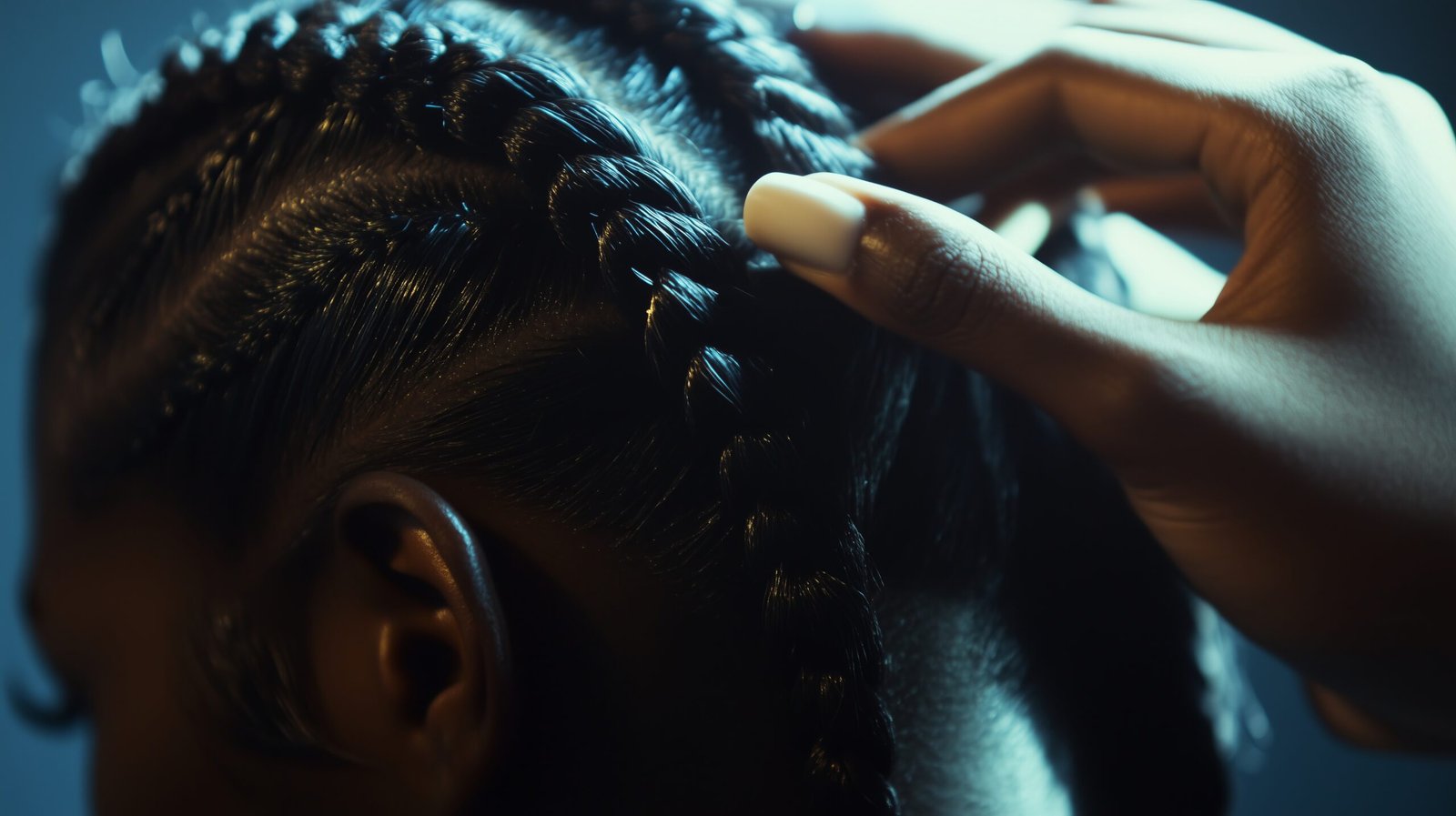
A girl can love her hair and hate wash day. Wash day is a tremendous chore some days.
A young woman can honor her texture and still be overwhelmed by detangling.
She can be proud of her coils and still resent shrinkage on a humid day.
She can feel beautiful in braids and still worry about the cost.
She can admire her afro and still need a break from maintenance.
That is not contradiction.
That is human life.
Beautiful things require care.
And care should not be romanticized so heavily that we erase the labor.
When older people hear young women talking about their hair, the first job is not to rescue the conversation from negativity.
The first job is to listen.
Ask better questions.
“What part feels hard right now?”
“Is it the time, the cost, the pain, the products, or the styling?”
“Do you need help learning your texture?”
“Do you need a simpler routine?”
“Do you want to vent, or do you want suggestions?”
“Has anyone ever handled your hair gently?”
“What would make this easier for you?”
That is how we build trust.
Not by forcing young people to use the language that makes us comfortable.
But by learning to hear what they are actually saying.
Because sometimes the burden is not the hair itself.
The burden is living in a world that under-teaches us, overcharges us, judges us, rushes us, stereotypes us, and then expects us to perform effortless confidence on command.
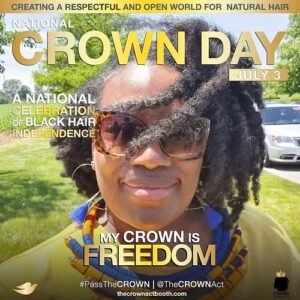
The burden is being told your hair is your crown, while nobody helps you pay for the crown care.
The burden is being told to love your texture, while being mocked, touched, policed, compared, or professionally penalized for wearing it.
The burden is being expected to turn every struggle into a celebration before anyone will offer practical help.
That is not fair.
And it is not listening.
There is a difference between hating your hair and needing support with your hair.
There is a difference between rejecting your texture and admitting that your texture needs a care system.
There is a difference between beauty and ease.
Too many young women are being asked to collapse those differences just to make everybody else comfortable.
Let her tell the truth.
Then help her build something useful.
Help her build a wash day plan that does not swallow her whole weekend.
Help her find affordable products that actually work.
Help her learn which styles protect her hair and which styles are pulling too tightly.
Help her learn the difference between tenderness and rough handling.
Help her learn that pain is not proof that someone is “doing her hair right.”
Help her build a scarf-and-bonnet drawer.
Help her make a hair budget.
Help her find a trusted stylist.
Help her create a simple routine for busy weeks.
Help her understand when her hair needs moisture, rest, trimming, protection, or freedom.
Help her build a kinder inner voice.
Because textured hair does not need denial.
It needs devotion.
And devotion is not pretending something is easy.
Devotion is learning how to care for what is precious.
That is true for hair.
That is true for young women.
That is true for trust.
If we want young people to come to us before they go to the hotline, the app, the comment section, the anonymous forum, or the search bar, we have to become better listeners.
Not louder correctors.
Better listeners.
Because sometimes a young woman is not asking us to fix her self-esteem.
Sometimes she is asking us to stop talking long enough to hear the real sentence.
“My hair is beautiful.”
“And it is a lot.”
Both can be true.
And when we can hold both truths, we become safer people to talk to.
Gentle Closing Affirmation
My hair does not have to be easy to be beautiful.
My life does not have to be simple to be worthy.
The things that require care are not lesser things.
They are often sacred things.
And I am allowed to need support with what is sacred.