Black Women Should Not Have to Change Our Hair to Climb the Ladder (w/example video link)
There comes a point when a Black woman gets tired of explaining her hair. And then people STILL do not understand the miracle that is Black hair. It’s just so divine. I know. But even a woman with this special and unique blessing gets tired.
Tired of explaining why she braided it. Tired of explaining why she took the braids out. Tired of explaining the Afro. The twists. The locs. The short cut. The shrinkage. The fullness. The edges. The texture that reaches toward the sun instead of falling toward her shoulders.
Some of us have spent a lifetime watching people who know very little about Black hair develop remarkably strong opinions about it. It’s astonishing to see and live through. Astounding.
And somewhere along the way, a conversation about our hair became a conversation everybody seemed entitled to enter.
A Black woman may braid, twist, loc, or otherwise protect her hair because those practices work with the physical characteristics of tightly coiled hair. Then an institution can declare those styles “unprofessional,” “distracting,” “extreme,” or inconsistent with its grooming standards. Suddenly she has a price of admission: manipulate your hair differently if you want the job, the promotion, the classroom, the uniform, the opportunity.
And historically, the alternative hasn’t always been some harmless five-minute hairstyle. “It’s just hair.
Black women have used chemical relaxers, repeated high heat, wigs, weaves, pressing and other methods partly within a social environment that rewarded proximity to straighter European hair standards. Some of those choices are perfectly enjoyable personal choices. The problem is coercion. A beauty option and an employment requirement are two very different things.
I am far less interested in who thinks that they own braids than I am in who owns the ladder.The thing about supremacy is the monitoring. The watching. The micro-management. Power AND control.
Who controls the job?
Who decides what “professional” looks like?
Who writes the school grooming policy?
Who decides whether a child looks distracting?
Who gets promoted?
Who gets sent home?
Who gets told she needs to change something about herself before she can come through the door?
Those questions carry consequences.
Black women have never needed the whole world to agree that our hair is beautiful. We have needed institutions to stop making their comfort with our hair a condition of our access.

That distinction deserves to be heard.
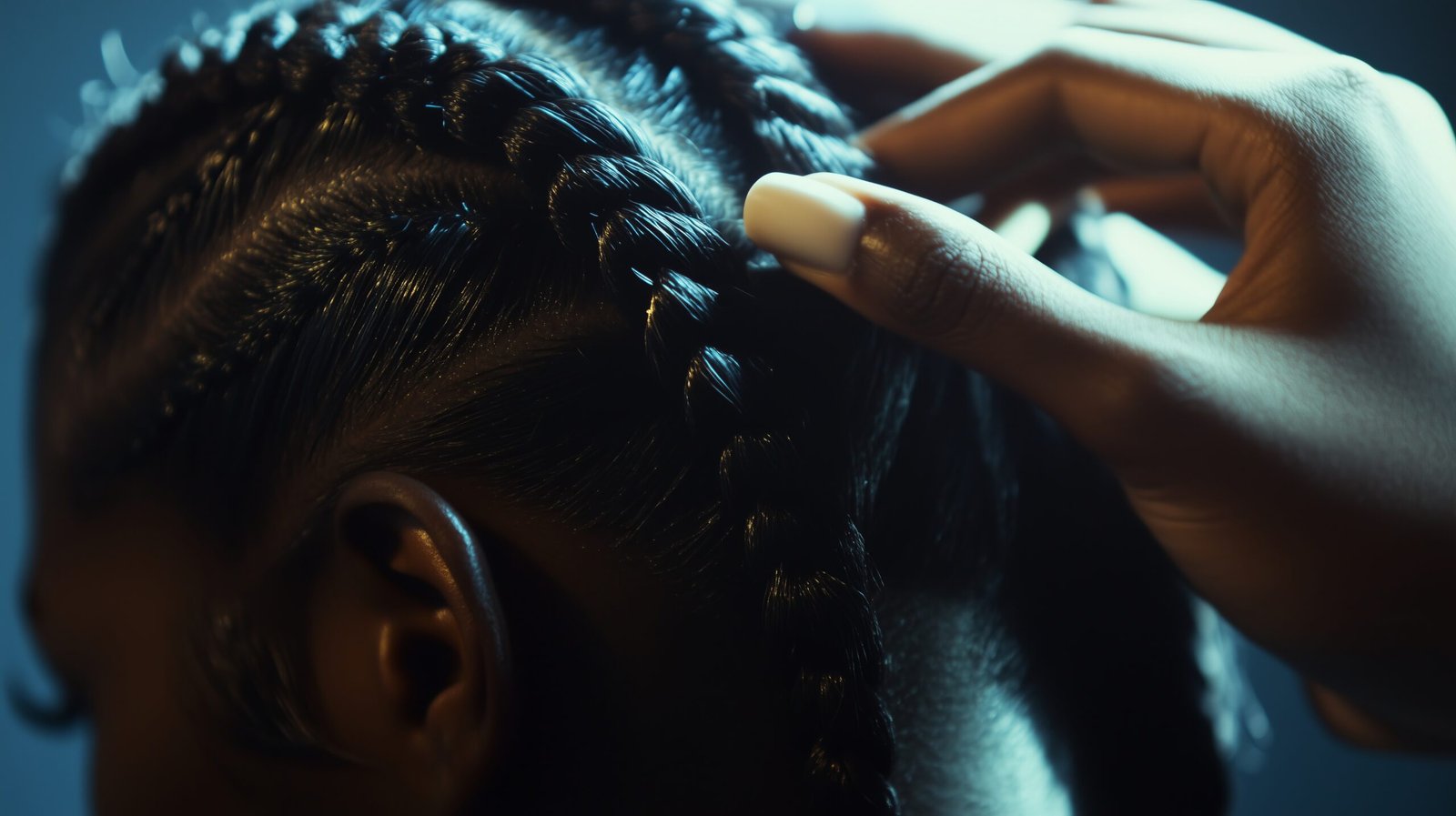
Our hair has texture. It coils, curls, tangles, shrinks, stretches and responds to moisture in ways that shape how we care for it. Braiding, twisting, cornrowing, locing and other low-manipulation practices can be practical ways of managing tightly coiled hair. Black women have passed knowledge about hair care between generations because somebody had to teach the girl sitting between a woman’s knees how to care for what grew from her own head.
There is tenderness in that history.
There is knowledge in those hands.
And there is health in learning what your own body needs.
The trouble comes when somebody else’s preference gains enough power to override that knowledge.
For generations, Black people have encountered standards that treated European-associated hair presentation as ordinary and Black hair as something requiring explanation, correction or permission. Natural styles have been called unprofessional, unruly, distracting, radical, inappropriate and messy. Women learned to press, straighten, chemically alter, cover and carefully arrange their hair while navigating schools and workplaces where looking acceptable could affect opportunity.
Many Black women enjoy straight hair. Many enjoy wigs and weaves. Many love switching styles entirely because Black hair can give us an astonishing playground of possibilities. Choice is part of the pleasure. The get-down and the get it up.
Outside compulsion is another thing entirely.
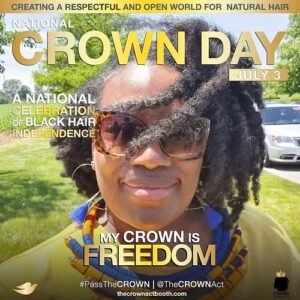
A woman should not have to repeatedly expose her hair to practices that are unhealthy for her simply because somebody with authority prefers another texture’s appearance. A child should not learn that the hair growing naturally from her scalp becomes a disciplinary problem when it behaves exactly as her hair was made to behave. Beautifully. Like a crown.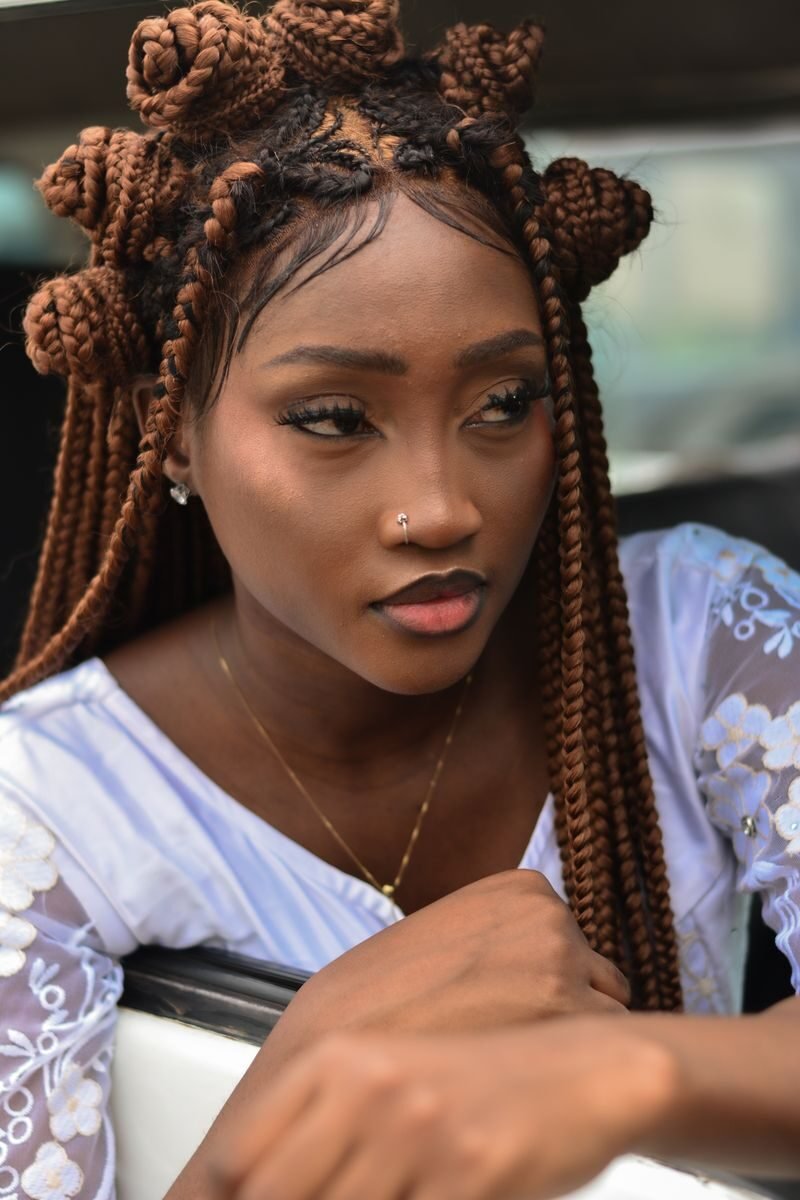
This is why I cannot spend much energy fighting over whether somebody from another culture wears braids.
Wear your hair. Do you. The problem comes when I try to do ME.
I am concerned about whether Black women can wear ours.
I care about the woman preparing for an interview who wonders whether her braids will cost her an opportunity before she has spoken three sentences.
I care about the girl who realizes adults think her Afro is somehow bigger than everybody else’s right to concentrate. (They can see the board, screen, or stage; they just choose to watch her show while calling her “attention-seeking.”)
I care about the woman who has mastered her profession and still finds herself calculating whether the hairstyle healthiest for her will be interpreted as insufficiently polished.
That calculation gets old.
Black women know something about calculations.
We calculate tone. We calculate facial expressions. We calculate whether correcting somebody is worth the trouble. Survivors know another version of this arithmetic intimately. You learn to scan the room, anticipate reactions, reduce friction and ask yourself what small part of yourself you can surrender today to make tomorrow easier.
After enough years, accommodation can begin to feel like breathing.
Hair can become one more place where a woman learns to ask, What must I change about myself so nobody gives me trouble?
Baby, sometimes the answer needs to be nothing.
Your body does not exist to make strangers comfortable.
Healthy accommodation has limits. There are workplaces where hair must be secured around machinery, food, medical environments or safety equipment. Those needs can be handled according to the actual task. Safety can be solved with safety.
Someone’s discomfort with Blackness is a different problem.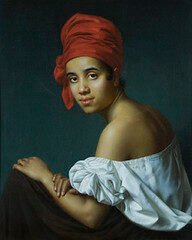
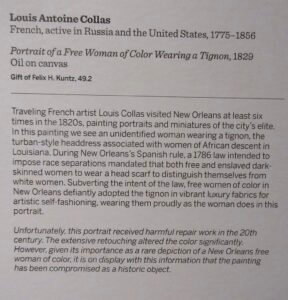
That is why the history of Black hair discrimination belongs in conversations about access. A door can technically be open while the people standing beside it still demand an admission fee.
Change your name.
Change your voice.
Change your clothes.
Change your hair.
Make yourself familiar enough that we can recognize you as professional.
Women know that bargain. Black women know it in surround sound.
And eventually somebody has to ask why the people seeking access are always expected to do so much changing while the people guarding the ladder are permitted to remain exactly as they are.
I don’t need everybody to celebrate my hair. I don’t need universal applause for braids. I don’t need strangers to understand the joy of taking down a style, washing my hair, watching the water wake my curls back up and deciding what I feel like doing next.
I need something much simpler.
Leave enough room in this world for Black women to care for our own bodies.
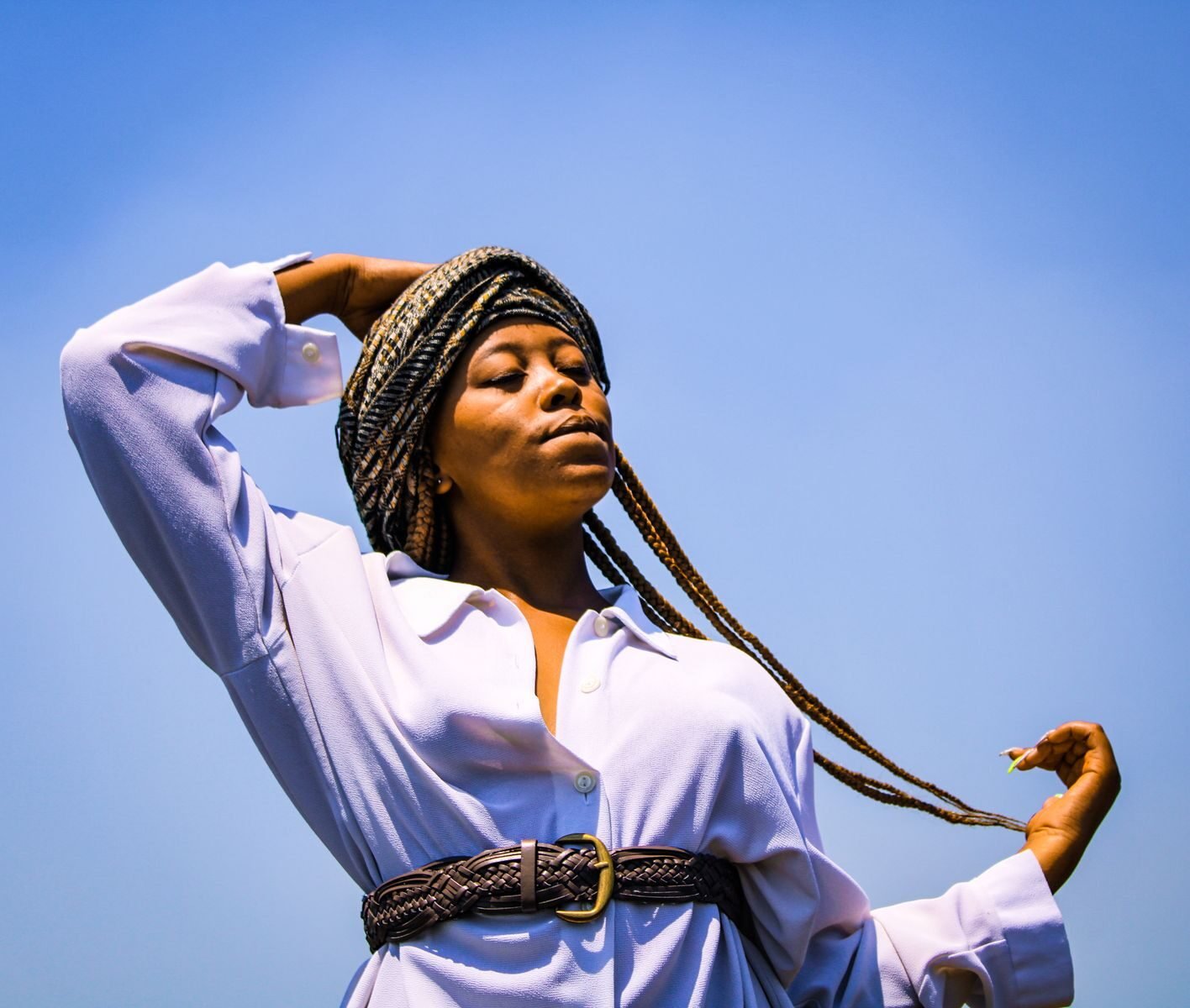
Let the Afro be an Afro.
Let the braid be a braid.
Let the loc be a loc.
Let a Black girl walk into school carrying books instead of carrying the burden of everybody else’s opinions about what grows from her head.
Let a Black woman climb the ladder without first being asked to leave pieces of herself on every rung.
Affirmations
I am allowed to care for my hair according to what keeps my hair and scalp healthy.
My professionalism lives in my character, judgment, preparation, skill and work. My hair does not need to imitate another texture to prove my competence.
I release the exhausting assignment of making everyone comfortable with my appearance.
I can choose braids because they serve me, an Afro because I love it, straight hair because I want it, or another style because today I simply felt like changing.
I deserve opportunities that do not require unnecessary harm to my body as an entrance fee.
I will notice when access quietly comes with demands for erasure.
I am allowed to ask whether a rule serves safety, function and fairness or merely somebody else’s preference.
I do not have to spend my life explaining perfectly ordinary parts of myself to people committed to misunderstanding them.
My hair can be soft, tightly coiled, enormous, cropped, braided, twisted, locked, stretched, tucked away or gloriously free.
And when I reach for the next rung, I intend to bring my whole head with me.
If You Love Us, Why Are You Fighting for the Right to Hurt Us? – WE Survive Abuse